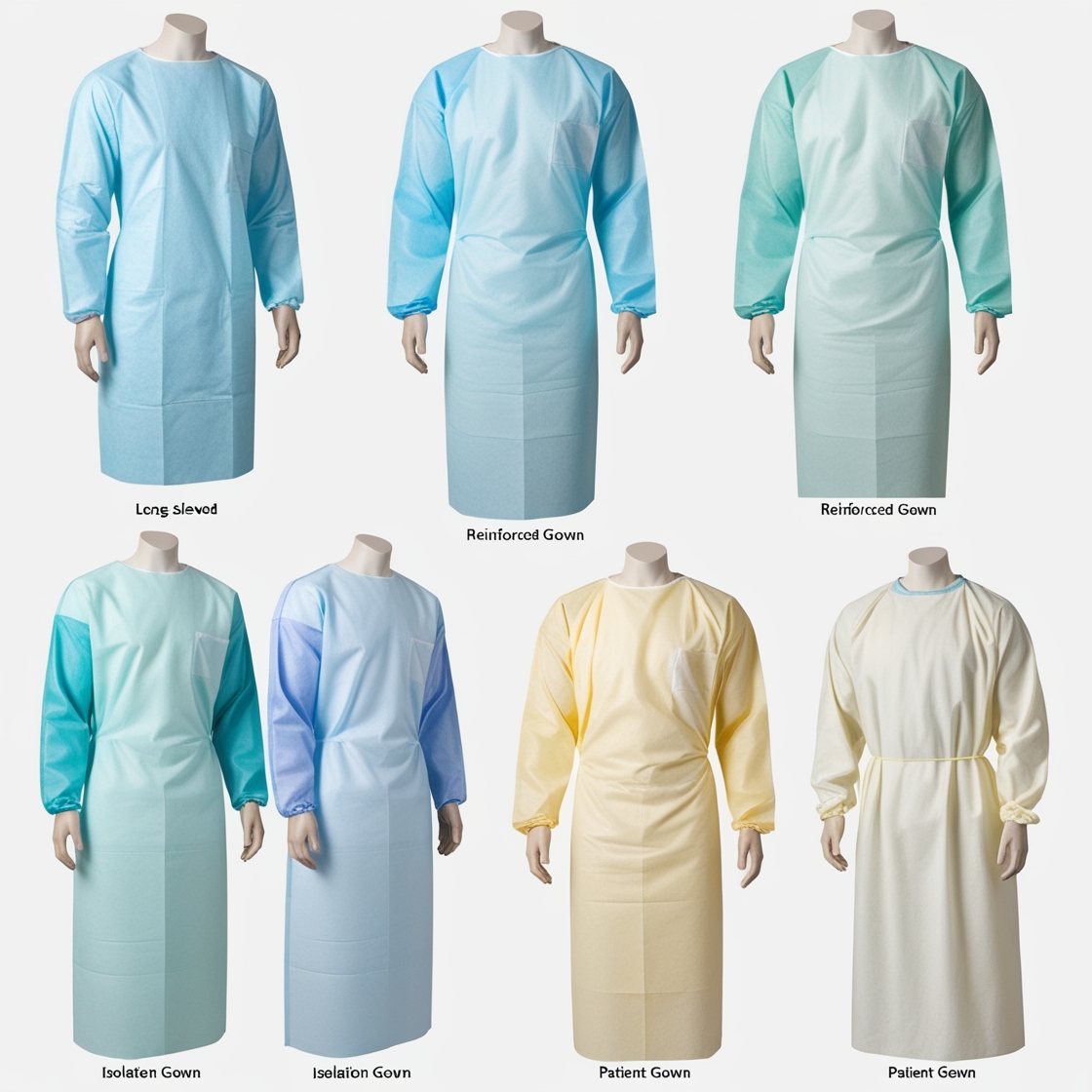
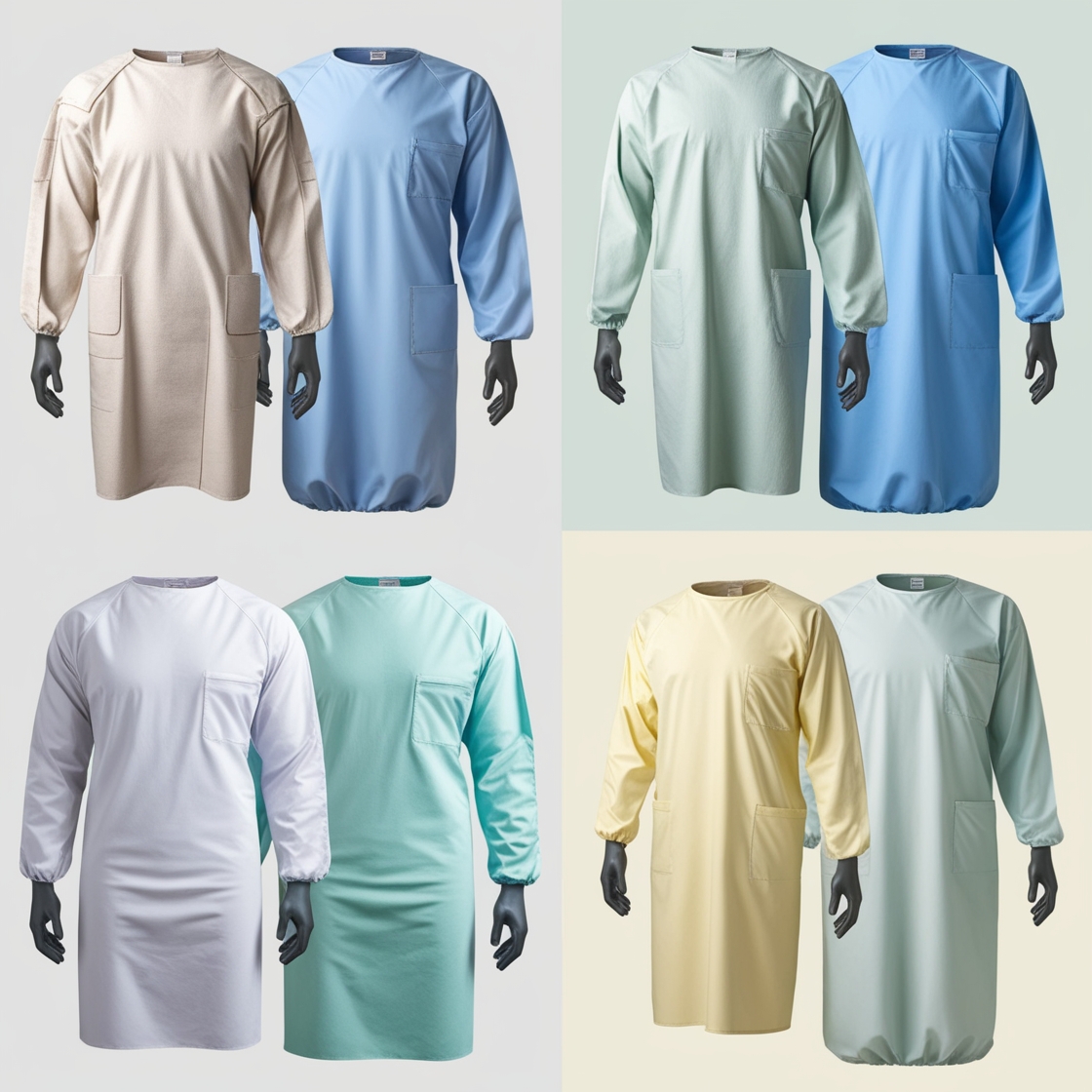
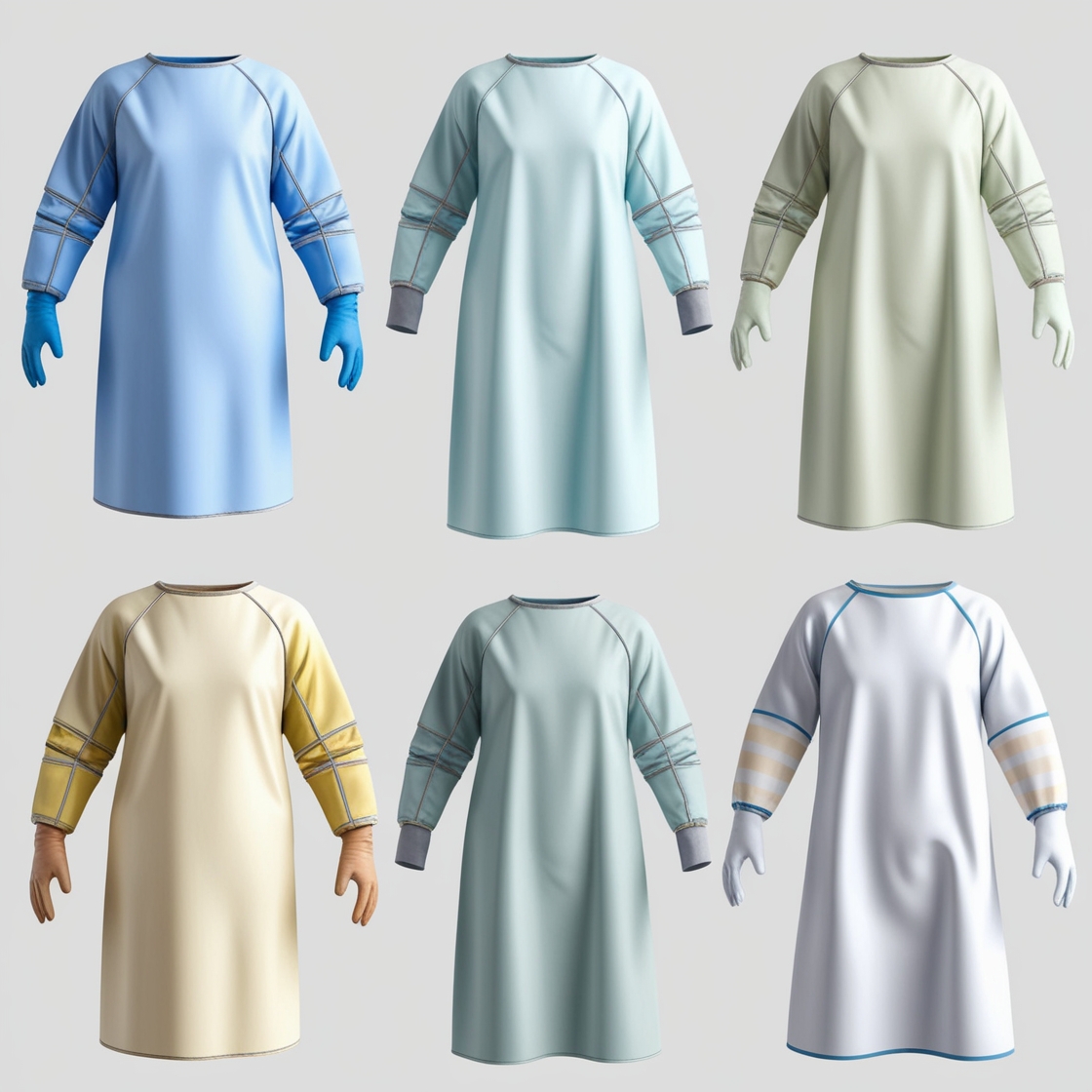
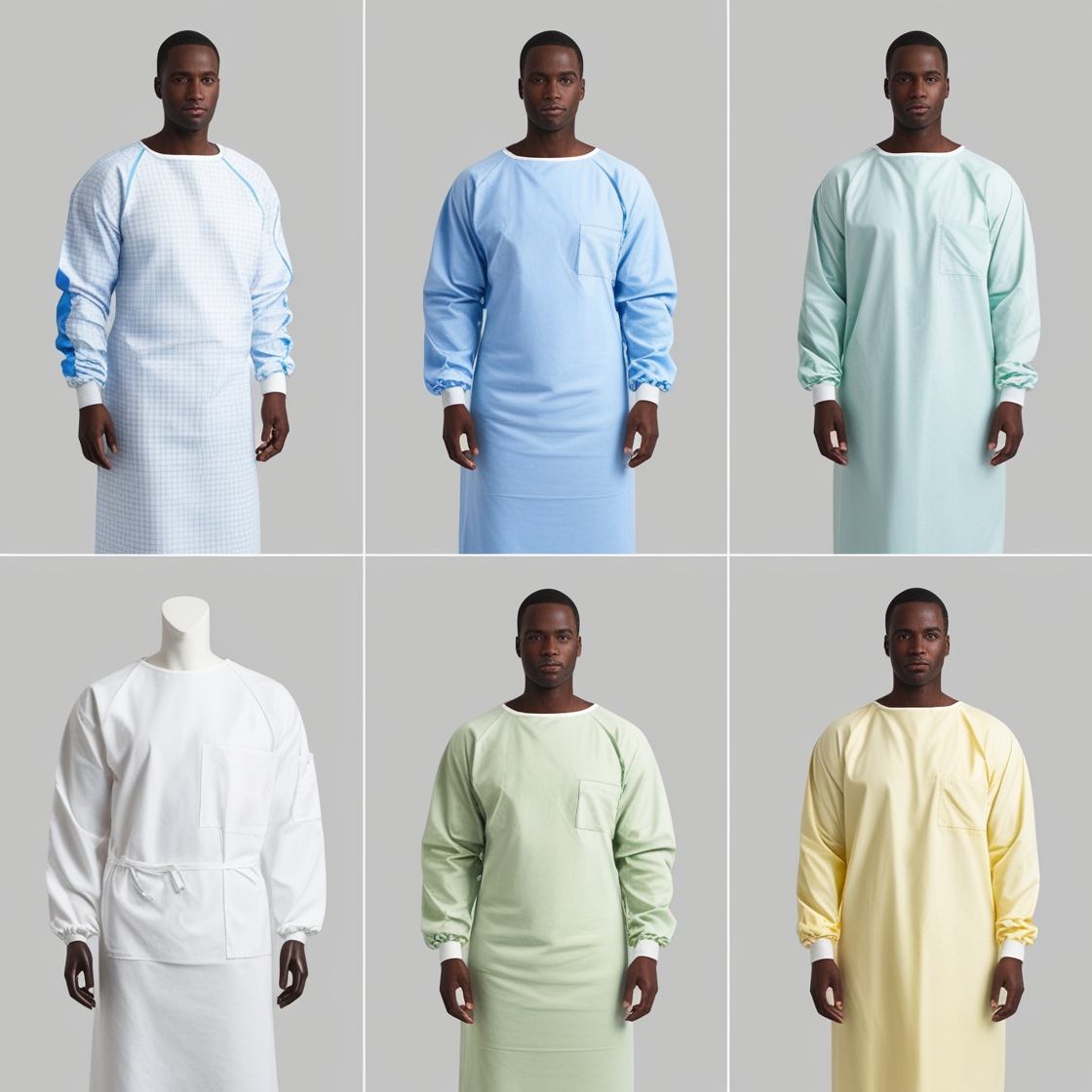
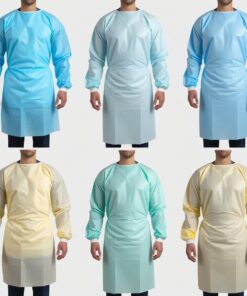
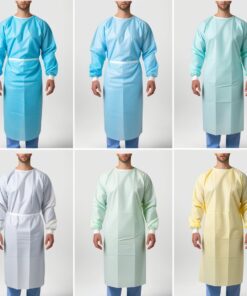
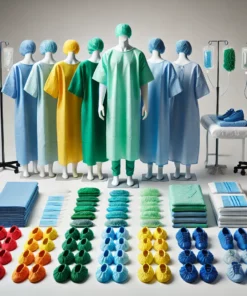
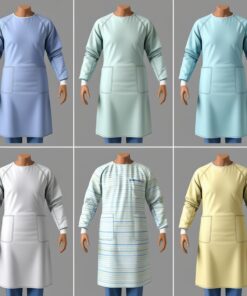
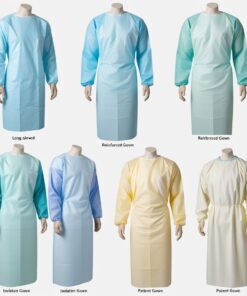
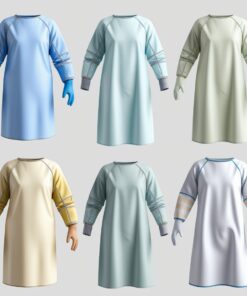
Hospital gowns come in different types, each designed for specific medical purposes. Here are the main types and their uses:
Types of Hospital Gowns:
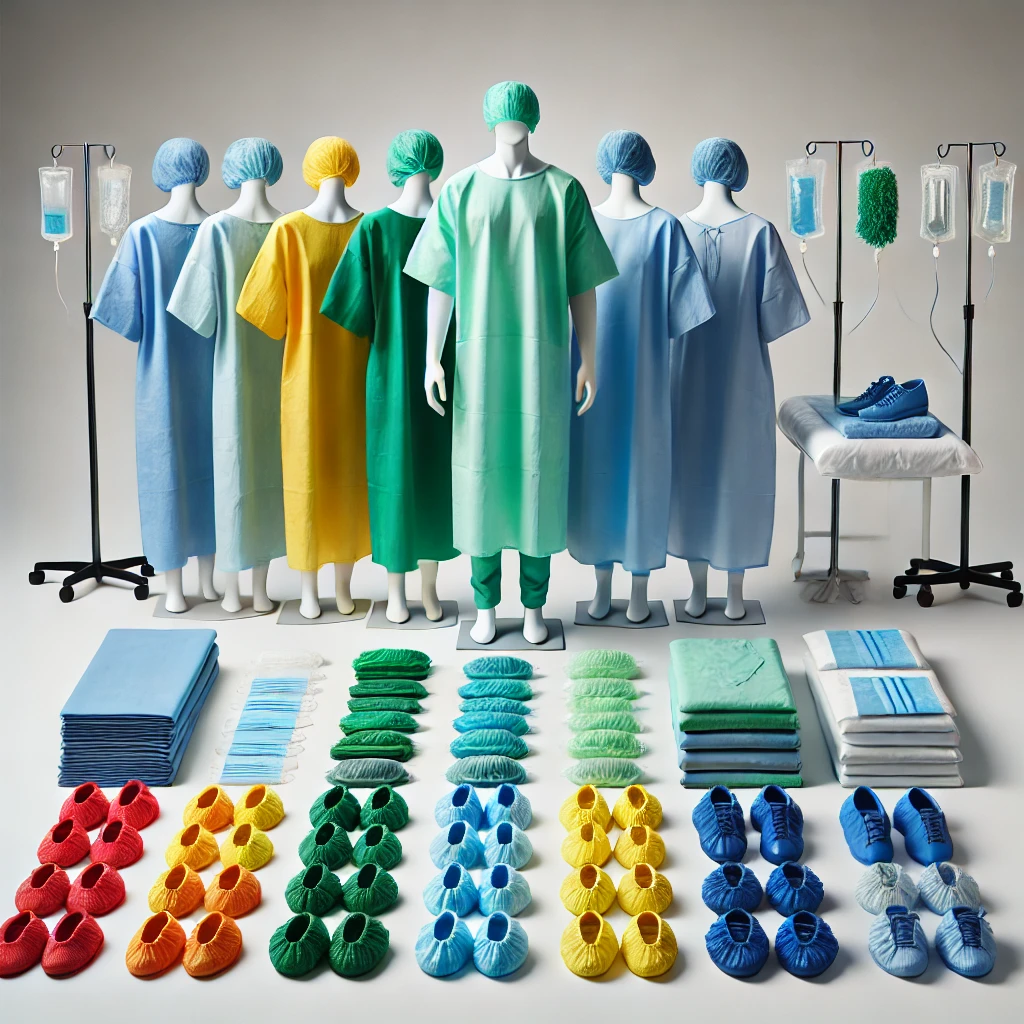
Patient Gowns
Uses: Worn by patients for medical examinations, hospital stays, or surgeries. These are typically open at the back for easy access to the body.
Subtypes:
Tie-back gowns – Traditional design with ties at the back.
Wrap-around gowns – Provide more coverage and can be adjusted for comfort.
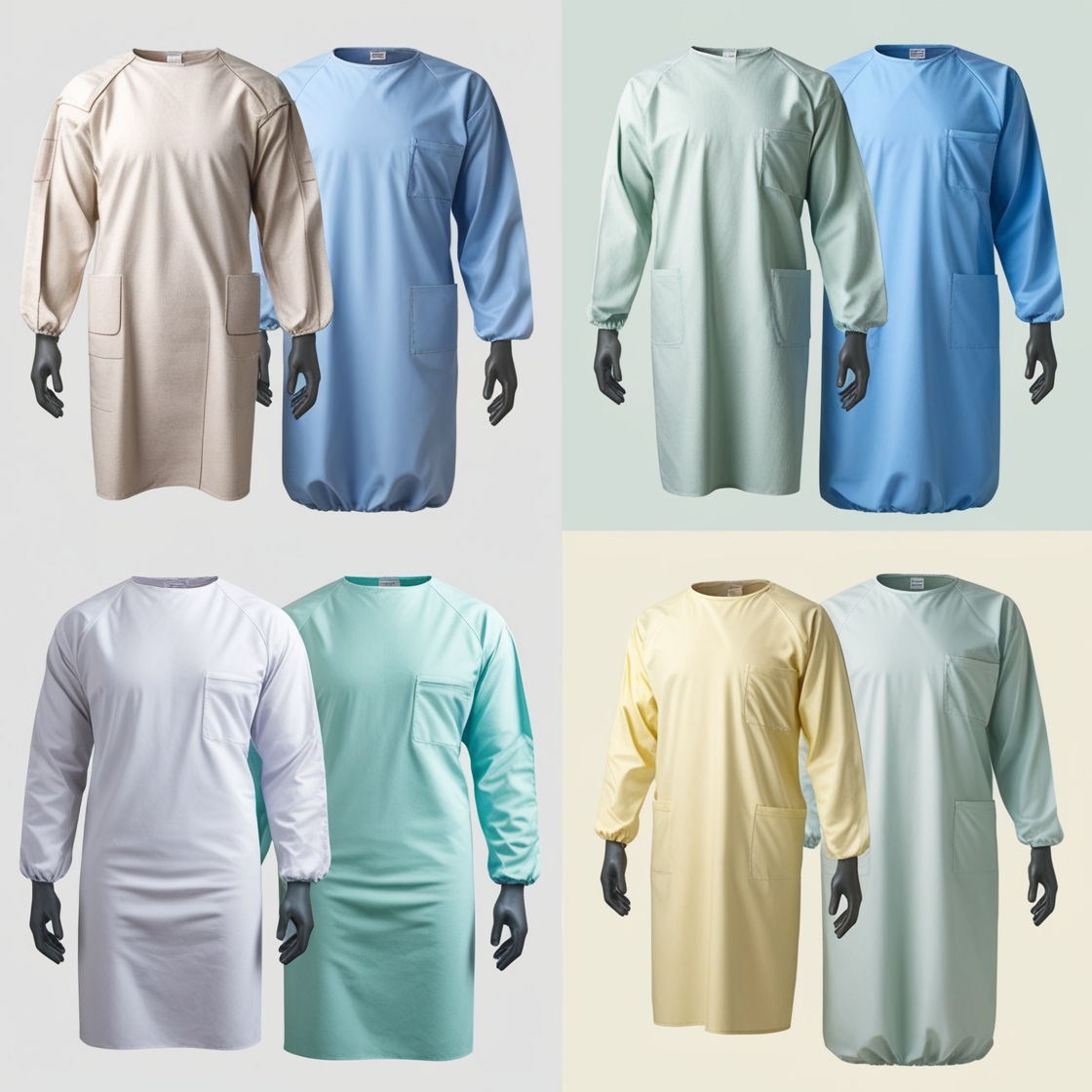
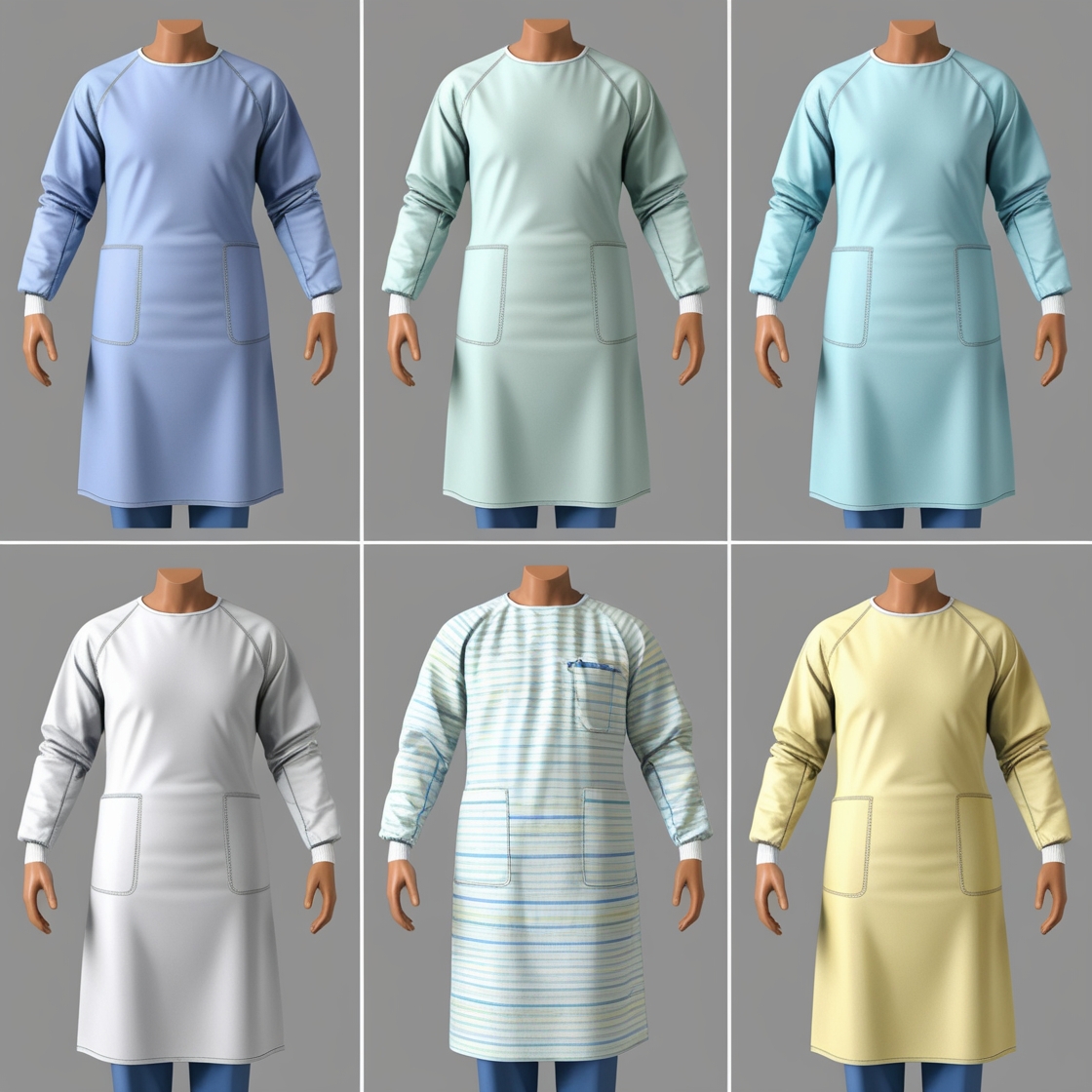
Surgical Gowns
Uses: Worn by surgeons and medical staff during procedures to maintain a sterile environment. They provide protection against contaminants and bodily fluids.
Subtypes:
Reusable surgical gowns – Made from fabric that can be sterilized and reused.
Disposable surgical gowns – Single-use gowns for infection control.
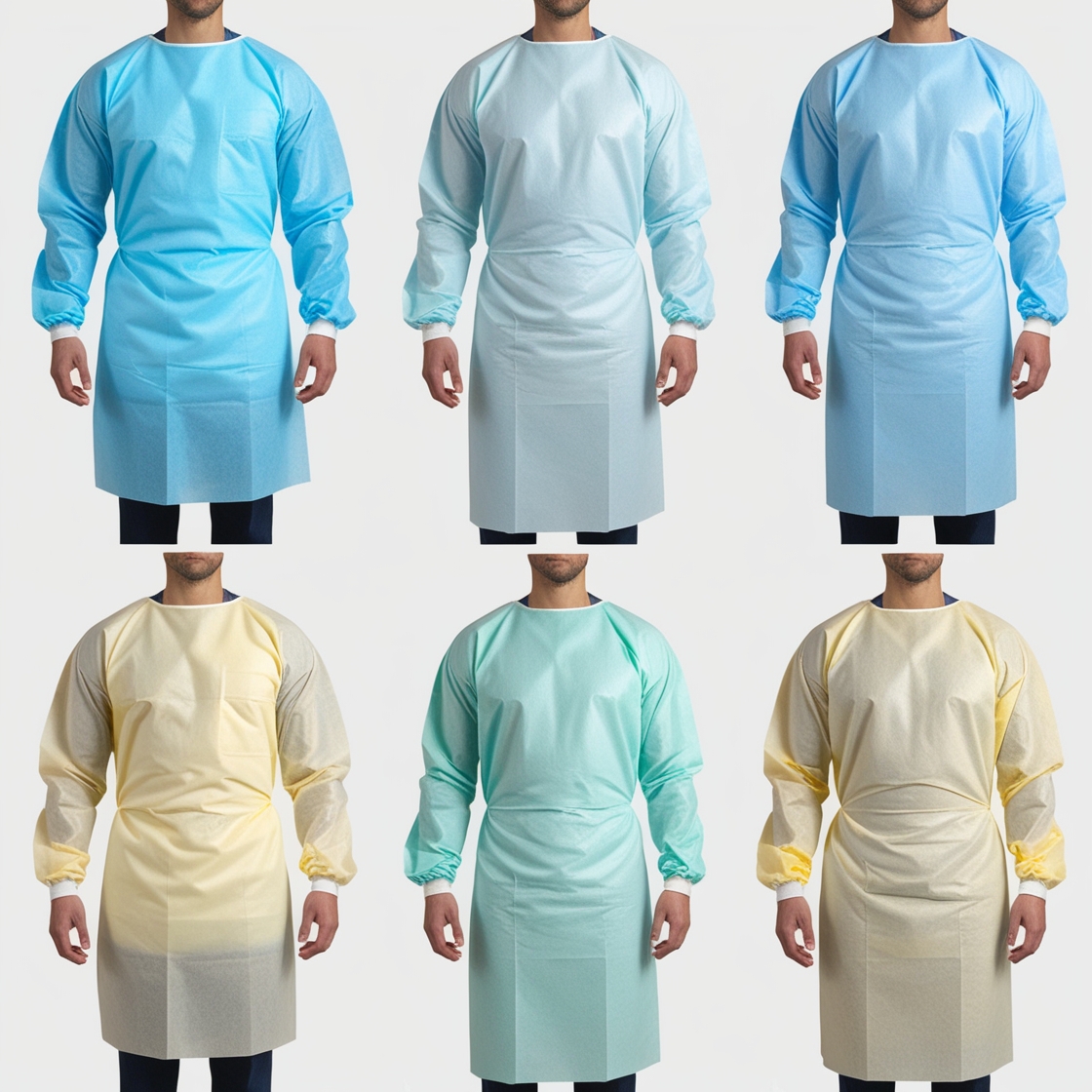
Isolation Gowns
Uses: Used in infectious disease control to protect healthcare workers and patients from contamination. They are worn in situations involving airborne or fluid-borne pathogens.
Subtypes:
Non-sterile isolation gowns – Used for standard patient care in non-surgical settings.
Sterile isolation gowns – Used for high-risk procedures requiring sterile conditions.
Disposable Gowns
Uses: Single-use gowns made from lightweight materials to prevent cross-contamination. Used in general patient care, laboratory work, and emergency situations.
Chemotherapy Gowns
Uses: Specially designed for healthcare professionals handling chemotherapy drugs. They are fluid-resistant and provide protection from hazardous chemicals.
Maternity and Birthing Gowns
Uses: Worn by pregnant women during labor and delivery. Designed for comfort, easy access, and movement.
Radiation Protection Gowns
Uses: Used in radiology and imaging departments to shield patients and staff from radiation exposure. Made with lead or radiation-absorbing materials.
Key Features of Hospital Gowns:
Material: Cotton, polyester, fluid-resistant, or disposable synthetic fabric.
Closure: Ties, snaps, or Velcro for adjustability.
Sterility: Some gowns are sterile for surgical use, while others are non-sterile for general wear.
Would you like recommendations on sourcing hospital gowns for your medical supplies business?
4o
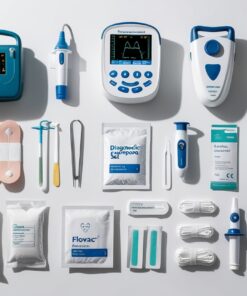
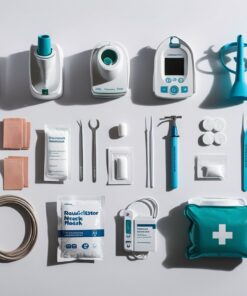
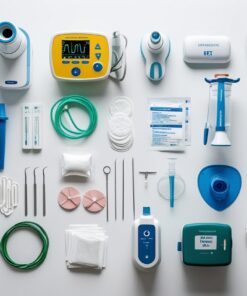
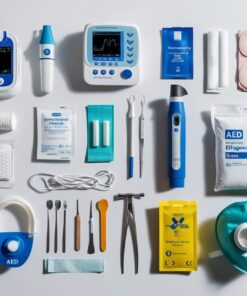
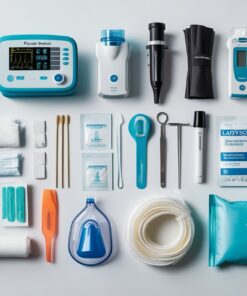
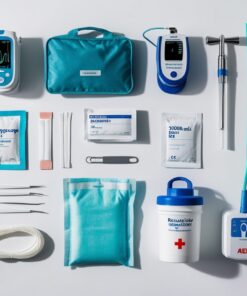
Our diagnostic equipment range is designed to deliver precision and efficiency, catering to the needs of medical professionals across various specialties. From portable ultrasound machines to foetal dopplers and diagnostic sets, we provide solutions that meet the highest industry standards. These tools include otoscopes, ophthalmoscopes, and digital thermometers, ensuring accurate monitoring and diagnosis for patients in all settings, from clinics to hospitals and emergency care units.